
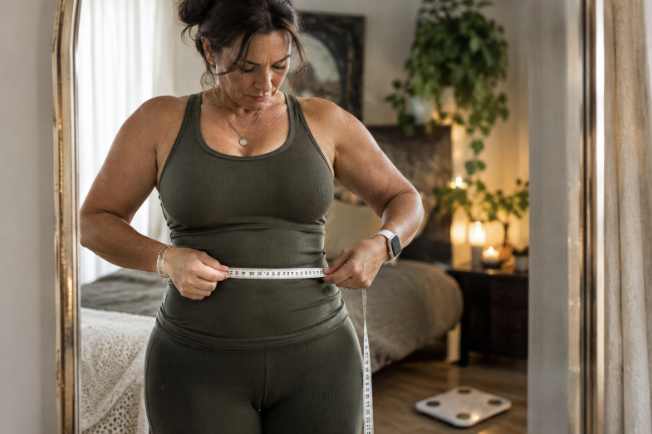
The most common complaint I get in my office is weight gain during peri/menopause. And it’s no wonder with the constant barrage of influencers and news articles talking about it. This area of health is big business right now! Even though I very much dislike health and wellness influencers and the monetization of wellness, the problem of weight gain as a result of shifting estrogen is very real. There is no denying it. So this month I want to break down the root cause of why this happens and give a few foundational elements to help keep it under control.
Throughout our lifetime our body shape changes along with our hormonal development. We start off with low hormones and a child’s curveless body and shift into more of an hourglass figure during reproductive years. We then start to see things shift again during perimenopause with some fat deposits shifting from the hips and thighs and beginning to lay in the abdominal region. By the time we are post-menopasal we have the dreaded meno-belly. I think it is important to note that these shifts are all normal and it is unrealistic (and unkind!) to expect to maintain the same body we had during reproductive years. Again, you are being unkind to yourself, if you expect this and feel like you are failing if you haven’t achieved it. Take a second to sit with that.
Ok, moving on. There are several reasons for this shift in body shape. The most commonly known reason is the loss of estrogen. Once a woman starts ovulating, the ovaries become the main source of estrogen. So it makes sense that when women begin to skip or stop ovulating, estrogen levels fall. What a lot of people don’t realize, though, is that the body is really smart and has ways to make up for this. To a (much) lesser degree, our fat tissue releases estrogen….does it make sense now why we are prone to fat gain during this time?! It’s nature's way of trying to balance the loss of ovulation.
Another reason for middle age weight gain is the rise of insulin resistance. This results in blood sugars rising which causes fatty liver and visceral fat development (the deep abdominal fat that surrounds the organs and is a major contributor to cardiovascular disease). Also, as we age we naturally lose muscles which is then ‘exchanged’ for fat. Poor sleep can also be a major player because it results in elevated cortisol levels which packs on fat, especially that visceral fat. All of these things working in combination make women much more sensitive to the effects of stress, which sort of caps it all off.
It may seem like the body is working against you as you age. But I assure you it’s not. It’s trying to make sense of these new hormonal patterns. But now that you understand the why of it, let’s talk about what to do about it. Obviously, HRT plays a big role and we can all thank our lucky stars the nation is finally recognizing the benefits. But HRT alone will not magically solve the weight problem, and in fact, studies show some weight gain is common when starting estrogen therapy. Don’t ask me why. We don’t know. It’s a conundrum. So other diet and lifestyle factors are needed.
Balance blood sugars by eating 3 meals per day. Yes, I said it. Don’t skip breakfast. While intermittent fasting is healthy, for women a fast greater than 14 hours is generally too much and results in unstable blood sugars and increased stress. I recommend eating balanced meals on a regular schedule allowing about 4-5 hours between meals. Avoid grazing and snacking. Assure there is plenty of protein and fiber in your meals and save your carbs for the second half of the day. (yes, that is the opposite of what you have been taught in the past!)
Build muscle by strength training 2-4 times per week is imperative. If you are new to lifting, start with light weight to assure you joints can handle the load. However, don’t get stuck on the light weights. Increase what you lift as you go with the goal of 3 sets of 6-8 reps each. If you are lifting a weight that you can do 10 or more reps at, it’s too light! Hiring a trainer can be very helpful for this reason.
Improve your sleep. This one is admittedly the trickiest and people can struggle even when they are ‘doing everything right’. However, getting back to the basics is always the best thing to do. First, allow yourself enough time to sleep. That is to say, go to bed at 10 and wake up no earlier than 6. This pattern works well for most people and also fits into our natural circadian rhythm. Get natural sunlight for 10-15 minutes within the first hour of waking (a walk is great for this). Avoid bright lights from lamps and screens for at least 1 hour before sleep. Lastly, magnesium glycinate is great for promoting relaxation and melatonin release resulting in deeper, longer sleep.
Manage your stress! This has been the topic of conversation for decades but what does it really take to do it? It’s different for everyone but I will tell you that it usually means making big changes in your life. Slowing down and doing less. Finding things that enrich you and fill you up instead of draining you. Vegging out on Netflix or scrolling on your phone does not fill you up. Spending time doing a hobby, laughing, and being at peace does. What does that look like for you?
You may have noticed that these recommendations are not new to you. They are the same old things we’ve been talking about for years. Boring. Not sexy. But effective when used consistently! Of course, there are many more personalized recommendations I can give in a 1 on 1 session to have an even bigger impact. But healing always starts with the foundational elements of wellness.
